Hanging artwork at the right height is just as important as choosing the right size. Art that’s hung too high can feel disconnected, while art that’s too low can feel crowded. Fortunately, a few simple rules make placement easier.
The Eye-Level Rule
When artwork hangs alone on a wall, the center should sit at about 57–60 inches from the floor, which aligns with average eye level.
This works best when there’s no furniture below.
Hanging Art Above Furniture
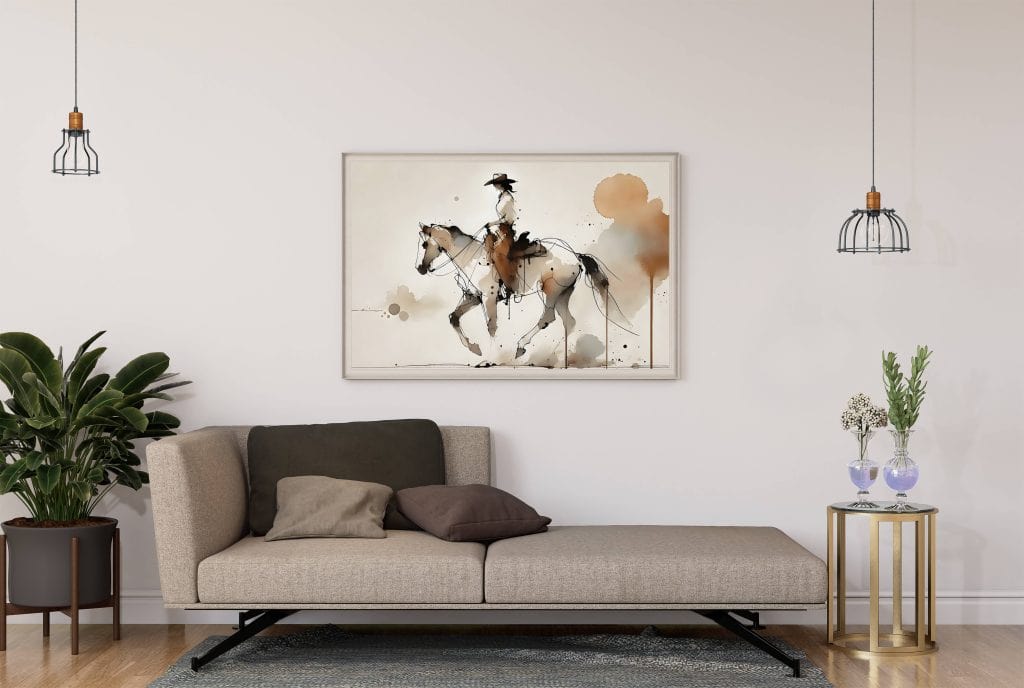
Above a Sofa
Place the bottom edge 6–8 inches above the sofa back. Center the artwork relative to the furniture, not the wall.
Above a Bed
Hang art 8–10 inches above the headboard. Slightly lower placement creates a relaxed feel, especially in bedrooms.
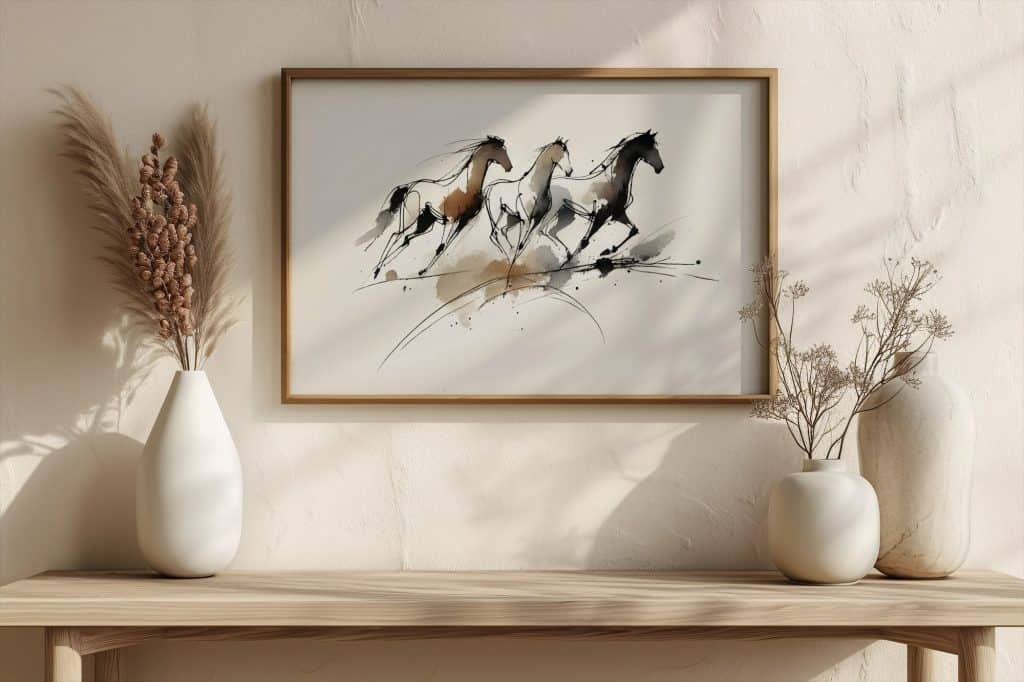
Above Consoles or Dressers
Maintain 6–8 inches of space between furniture and artwork to keep the grouping cohesive.
If you’re unsure how large the piece should be, refer back to the Wall Art Size Guide before finalizing placement.
Nursery Placement
Nursery artwork benefits from slightly lower placement and lighter visual weight. Softer positioning feels calmer and adapts better as the room evolves.
Hanging Sets and Groups
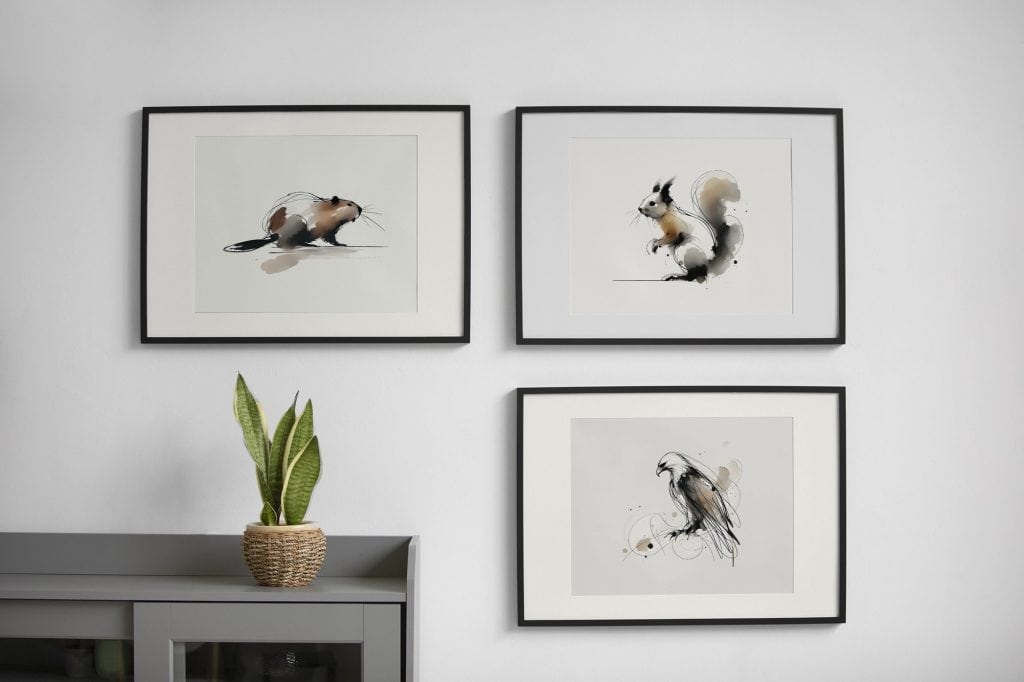
Treat grouped artwork as one visual unit. Align the center of the entire arrangement rather than each piece individually. If you’re planning multiple frames, spacing guidelines in the Gallery Wall Spacing Guide are especially helpful.
Common Hanging Mistakes
- Hanging art too high to “fill space”
- Centering on walls instead of furniture
- Mixing inconsistent heights
Lowering artwork is often the simplest fix.
Final Thoughts
Thoughtful height placement helps artwork feel connected and comfortable. Small adjustments can make a surprising difference in how a space feels day to day.