
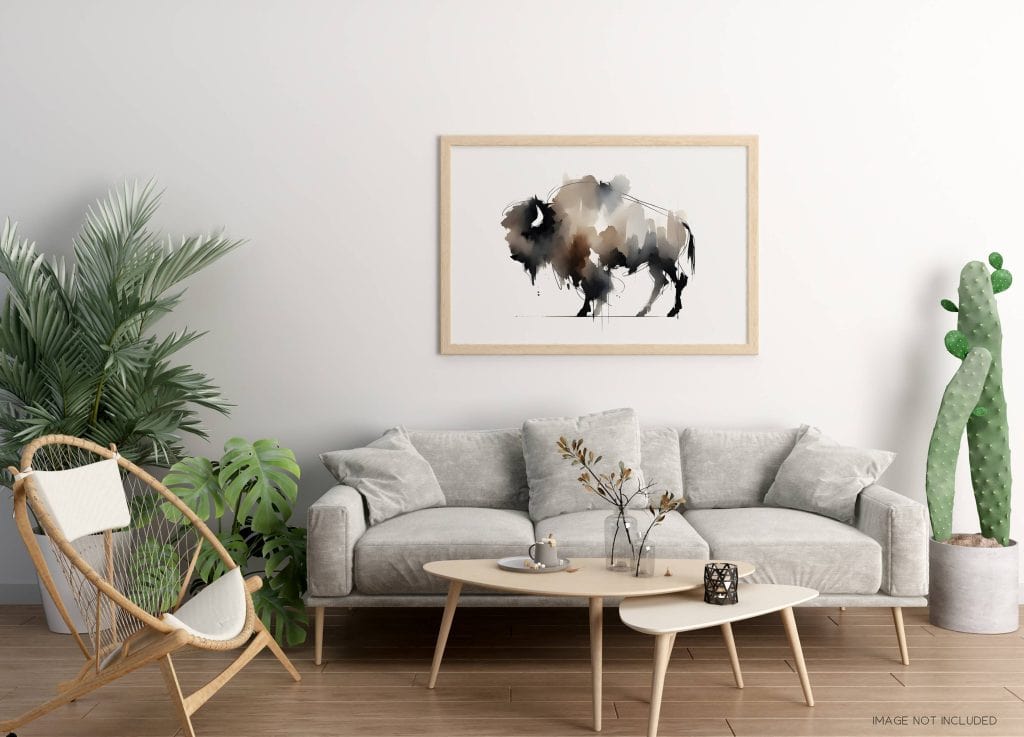
Choosing wall art is often easy. Choosing the right size is where most people hesitate. Art that’s too small can feel disconnected from the room, while oversized pieces can overwhelm the space. The goal is balance — artwork that feels intentional, grounded, and comfortable to live with.
This guide explains how to choose wall art sizes that work in real homes, whether you’re styling a living room, bedroom, or nursery. A few simple guidelines can remove most of the guesswork.
Why Wall Art Size Matters
Size plays a larger role than color or subject. Properly scaled artwork anchors furniture, creates visual harmony, and makes a room feel complete. When art is undersized, walls feel unfinished. When it’s oversized, the space can feel crowded.
Most sizing mistakes come from choosing art that feels “safe” rather than proportional.
The Two-Thirds Rule
A reliable guideline is the two-thirds rule:
Wall art should be roughly two-thirds the width of the furniture beneath it.
Examples:
- A 72-inch sofa pairs well with art around 48 inches wide
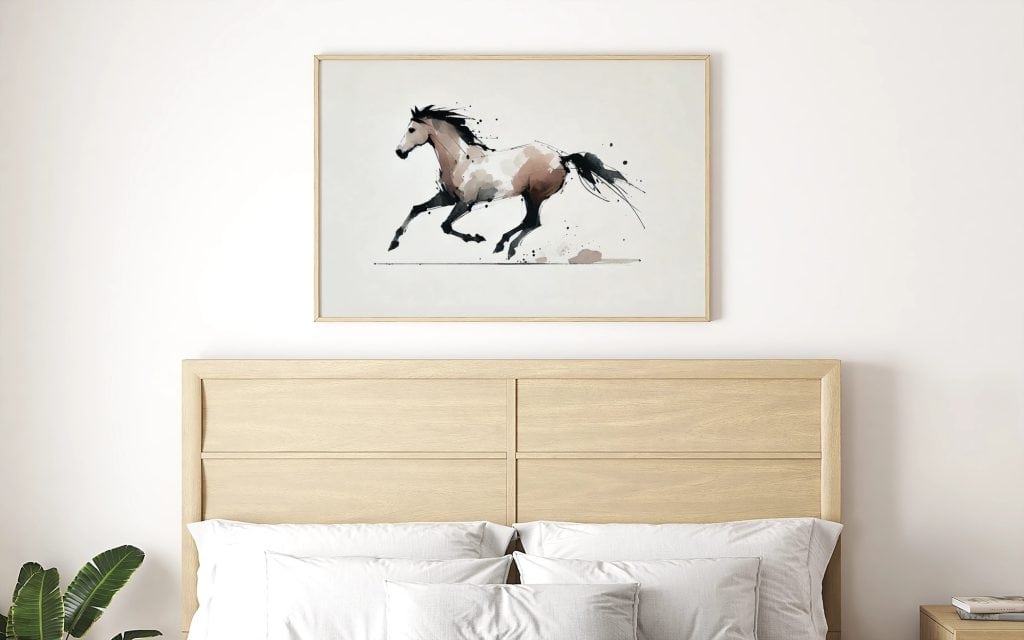
- A 60-inch bed works well with art around 40 inches wide
This rule applies across living rooms, bedrooms, and nurseries and creates immediate visual balance.
Choosing Wall Art Size by Room
Living Room
Above sofas or consoles, larger pieces or pairs work best. Slightly oversized art usually looks more intentional than something too small.
Bedroom
Horizontal formats above the bed feel calmer. Avoid filling the entire wall — negative space is important in bedrooms.
Nursery
Softer proportions and extra breathing room create a calmer environment. If you’re designing a nursery, our Nursery Wall Art Guide expands on size and placement considerations for these spaces.
Common Wall Art Sizes
- 12×18 – shelves, small walls
- 16×24 – desks, side walls
- 20×30 – medium feature areas
- 24×36 – statement walls
- Sets or pairs – wide walls or gallery layouts
Seeing artwork in context makes these differences clearer.
Single Pieces vs Sets
Single pieces feel modern and calm. Sets add rhythm and work well on wide walls. If you’re arranging multiple pieces, spacing becomes just as important — our Gallery Wall Spacing Guide covers this in detail.
Common Size Mistakes
- Choosing art that’s too small
- Hanging art too high
- Centering on the wall instead of furniture
- Ignoring nearby scale
If something feels off, size is often the issue.
Final Thoughts
Thoughtful proportions make a space feel balanced and complete. Use these guidelines as a starting point, then trust your eye. Small adjustments in size can transform how a room feels.